


ARTE REGARDS - WHEN ARSENIC POISONS A SERBIAN CITY
The small Serbian town of Bor depends on copper mining. Many residents blame the mine—formerly state-owned and, since 2018, majority-owned by a Chinese conglomerate—for the severe pollution that is believed to be causing their cancers. Today, students and activists have joined forces politically to fight for greater democracy and a cleaner homeland.
Lazar Milutinović and Marko Andrejević are students from Bor, a small town in eastern Serbia that relies on copper mining. Both are part of the student movement that has been driving social change in Serbia for the past two years. Bor suffers from emissions linked to copper mining. Critics point out that high levels of heavy metals continue to be detected: many people are developing cancer, and life expectancy there is low.
Environmental engineer Snežana Šerbula has studied the mine’s impact on Bor throughout her career. She is one of the most prominent critics of mining in Serbia and has published numerous scientific studies on the effects of heavy metal emissions on the environment and residents’ health.
In the report, workers say they were not adequately informed about the possible long-term consequences. Criticism is also coming from the local population: the authorities and the company are accused of a lack of transparency. Lazar and Marko have founded a local opposition movement calling for greater oversight and stricter environmental standards.
Jasna Tomić, from the village of Krivelj near Bor, risks losing her homeland to the mine. This village, inhabited for centuries by the Vlach ethnic minority, is set to make way for mining operations. Many neighbors have already left the area. Jasna, too, fears she will lose her home and is fighting to ensure that at least the entire village community is provided with a new place to live.
ARTE RE - YOUNG GERMANS COMMITTED TO DEMOCRACY
Saxony-Anhalt ahead of the regional elections: Max, 17, is fighting for an open society; Hannes, a law student, is documenting the shift to the right in his home region; and Alexandra, a cosmetologist, sees every day just how deeply divided her clientele is politically.
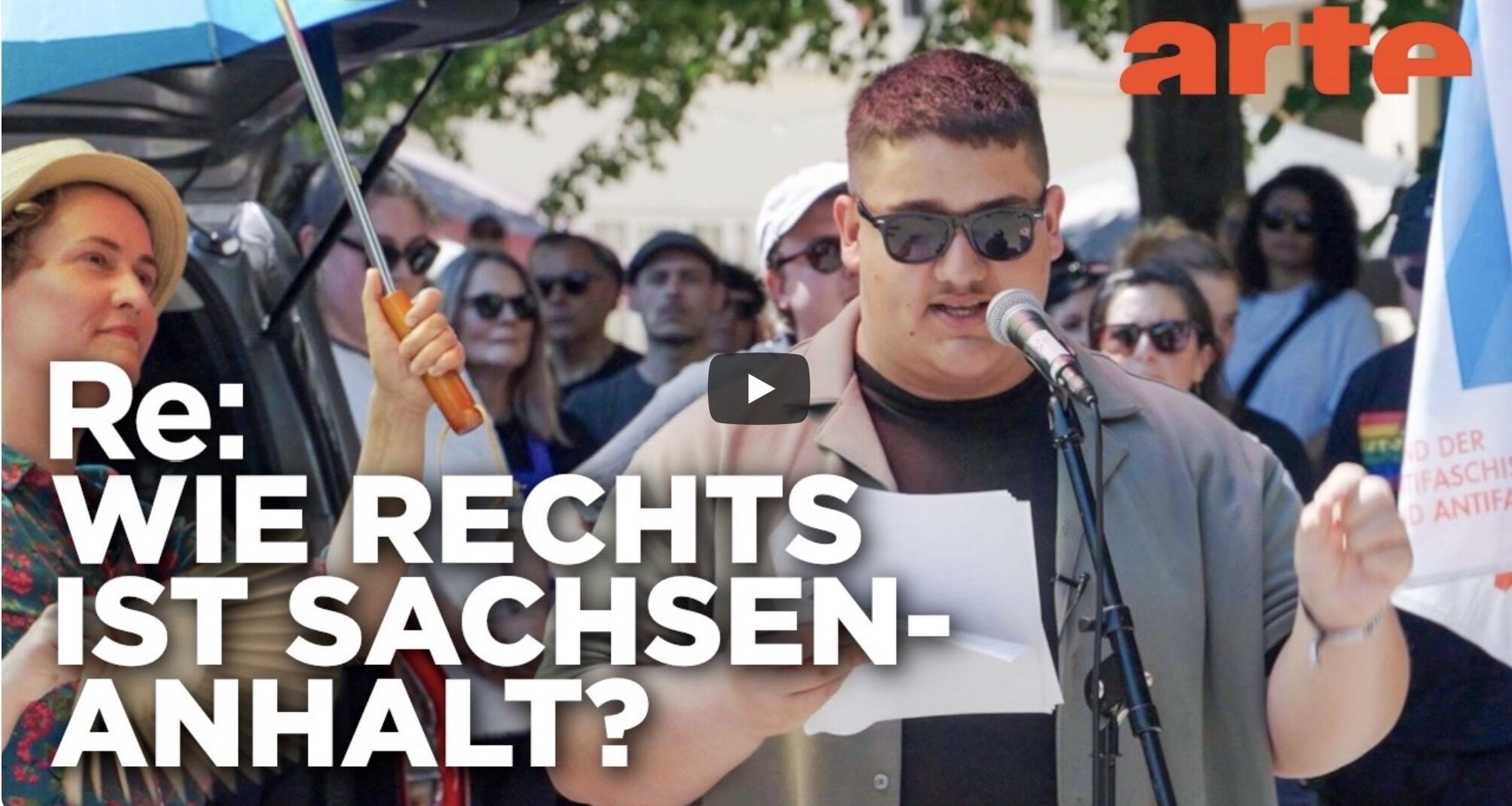
A few months before the fall state elections in Saxony-Anhalt, which could well prove decisive: the regional chapter of the AfD—classified by domestic intelligence agencies as a confirmed far-right movement—is polling very close to an absolute majority.
Max, 17, uses his social media channel “Maximal demokratisch” to advocate for democracy, against fascism, and for an open and pluralistic society. As the son of an Iraqi father and a German mother, he learned at a very young age what exclusion and racism mean. Hannes, a law student, documents the shift to the right in his home region while grappling with his own family history, particularly since breaking ties with his father, who is close to the AfD. To protect himself from hostility and attacks while filming, he also practices kickboxing. Alexandra, a close friend of Max’s, runs a beauty salon in a housing project made up of prefabricated apartment blocks. Despite everything, she has deliberately chosen to stay in her home region—even though she is constantly confronted with the divisions in society right there in her salon.
Three young people, caught between their commitment, their daily lives, and questions about the future that awaits this deeply divided state.